M. Sc. Sandra Eichardt
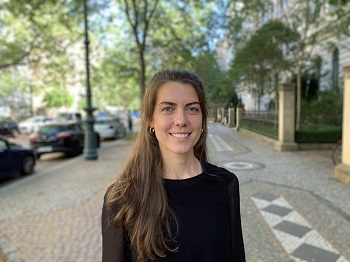
M.Sc. Sandra Eichardt
Current projects
Advice-giving on upcoding
Duration: 01.07.2024 to 31.08.2027
Diagnosis-Related Groups (DRGs) improve cost transparency in hospitals but create incentives to classify patients into higher-paying DRGs (upcoding). Physicians in hospitals typically lack these direct incentives. However, decisions in organizations are rarely made in isolation, and the exchange of information shapes the behavior of groups. Field data make it difficult to identify upcoding and related communication at the individual level. To address this, I employ a controlled laboratory experiment to investigate the effect of advice-giving on medical upcoding.
Leibniz ScienceCampus "Challenges in Healthcare" Head of the project The role of online-medical service provision
Duration: 01.07.2020 to 31.12.2026
Nowadays, patients in many countries can contact doctors not only in person, but also via video chat or questionnaires. In recent years, and especially during the COVID-19 pandemic, telemedicine methods have become more important than ever in medical care. While these new forms of treatment can improve the accessibility of doctors for immobile patients or for patients in sparsely populated regions, they can also affect the doctor-patient relationship and treatment outcomes. However, very little is known about the impact of telemedicine methods on the quality of healthcare.
In this project, we want to systematically investigate how telemedicine methods influence behavior and treatment outcomes in the doctor-patient relationship. The studies conducted in this project are based on controlled laboratory experiments. In recent years, health economics research has begun to use these types of experiments to test the behavioral effects of various features of the physician-patient decision environment. In the laboratory, ceteris paribus changes in parameters can be made and their effects on individual behavior directly observed. External aspects such as patient or physician characteristics can be isolated, and if the behavior changes, this variation can be attributed to the changed parameter (e.g. the type of online interaction).
In the first of the three subprojects, we initially focus on physicians and isolate the effects that certain online characteristics have on their communication and treatment decisions. In the second subproject, the focus shifts to patients, allowing us to investigate questions that relate directly to patients' reactions to specific online tools. In the third sub-project, the focus is more on the interaction between doctors and patients. Our results should not only provide insights into the design of effective telemedicine tools, but also enrich theoretical research on doctor-patient relationships.
This text was translated with DeepL on 26/02/2026